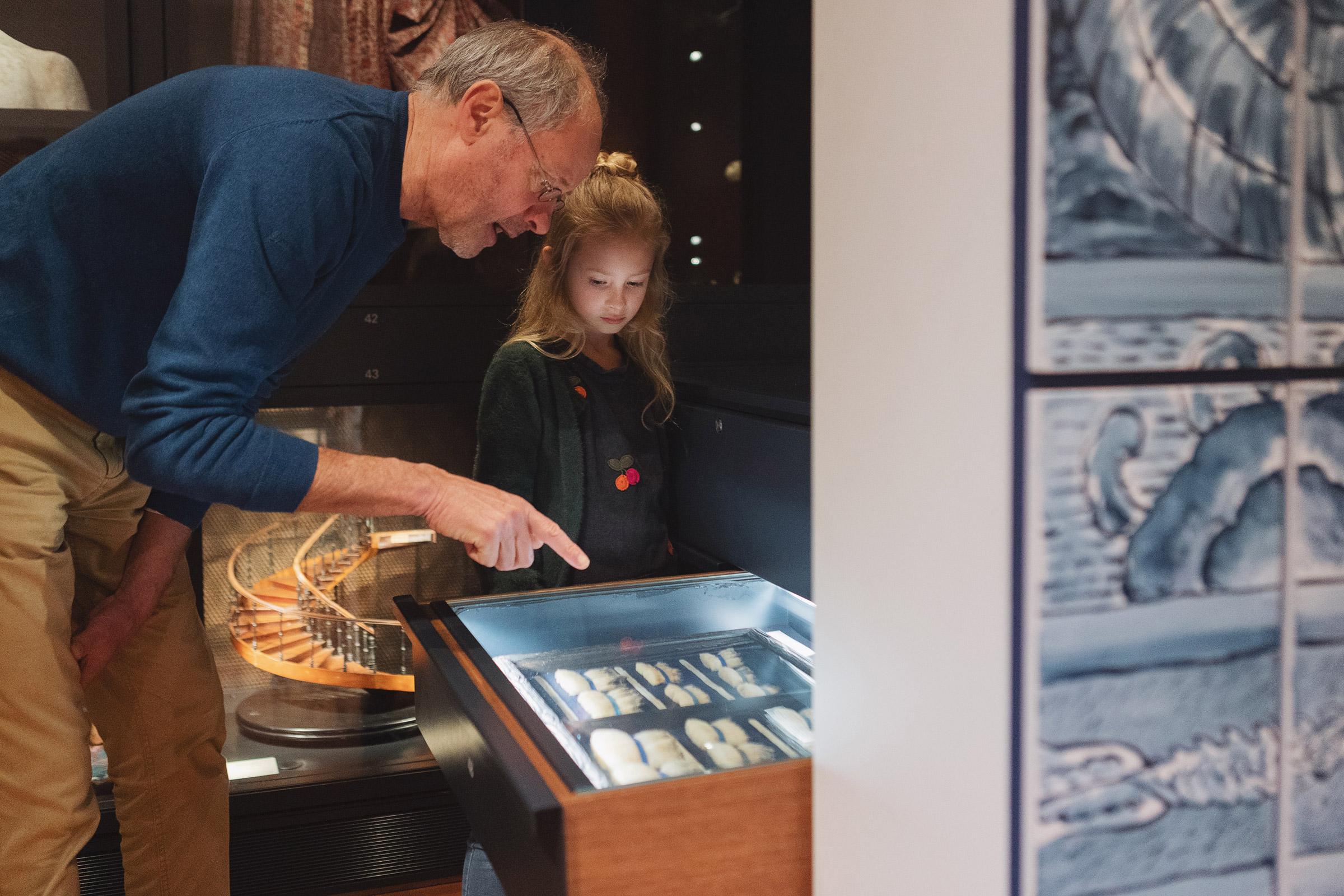
The Battle of Rammekens
The story behind the tapestry
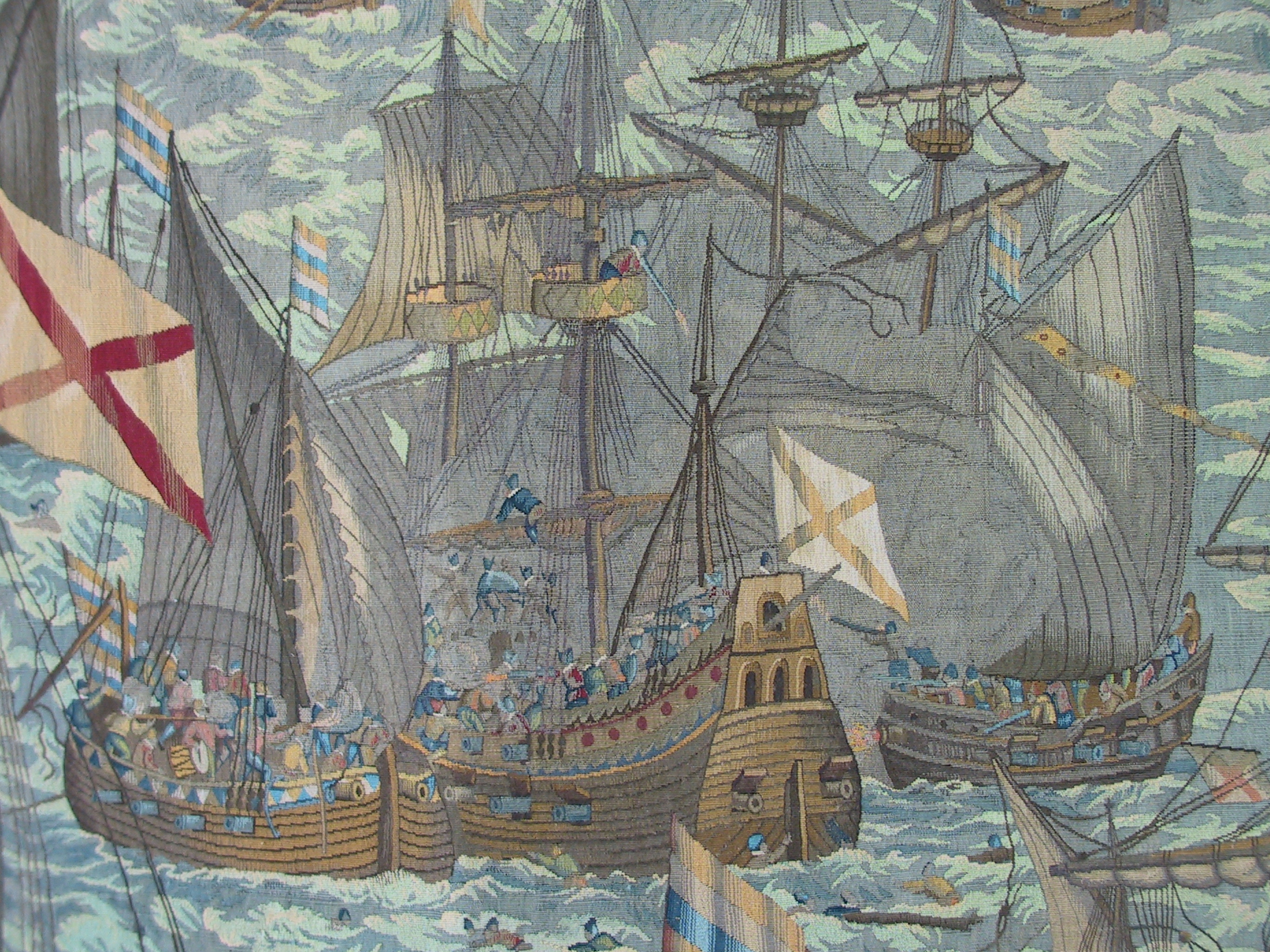
Crews from two Zeeland boats boarding a Spanish ship
The Zeeland tapestry – The Battle of Rammekens
This tapestry is part of a series commissioned by the States of Zeeland and made between 1593 and 1604. The series depicts key military events from the struggle against the Spanish in the waters of Zeeland. The Battle of Rammekens tapestry was designed by Hendrik Corneliszoon Vroom (c. 1562–1640), the founder of Dutch marine art.
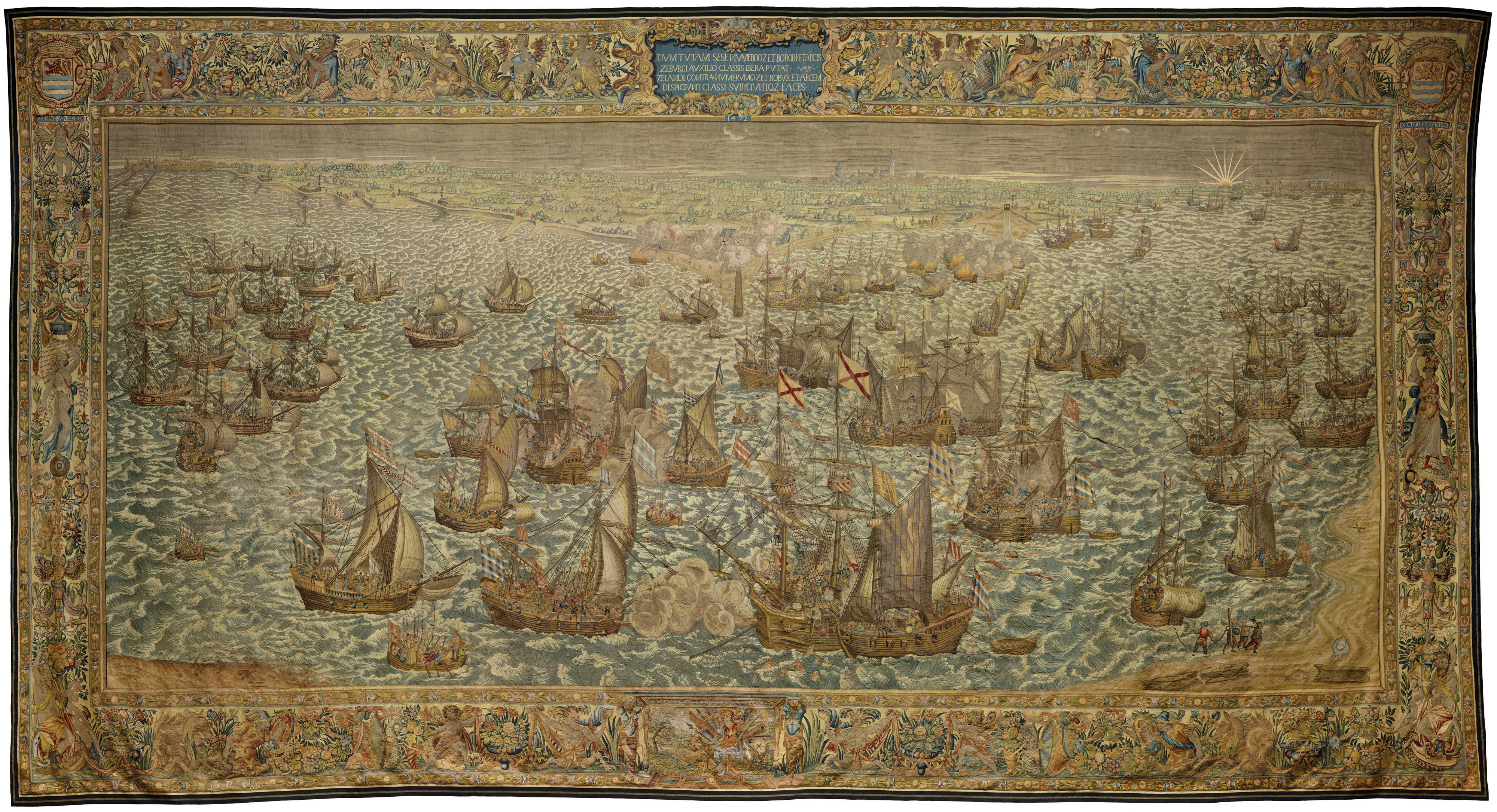
Tapestry The Battle of Rammekens (1596-1598)
Arrival of the fleet off Blankenberge
On 10 June 1572, the fleet of the Duke of Medinaceli, Alba’s successor, reached the Flemish coast off Blankenberge. The following day, Medinaceli himself left for Sluis with several small transport ships. Because of their deeper draught, the larger ships had to take a longer route via the Honte. Zeeland sailors lay in wait for the Spanish ships and managed to disable four transport vessels. The captain of a large Spanish merchant ship, who came from Vlissingen, defected and ran the ship aground on a sandbank off Cadzand.
The Spanish fleet regrouped at sea and sailed past Vlissingen unopposed on 14 June. Strong westerly winds prevented the Zeeland ships from putting to sea.
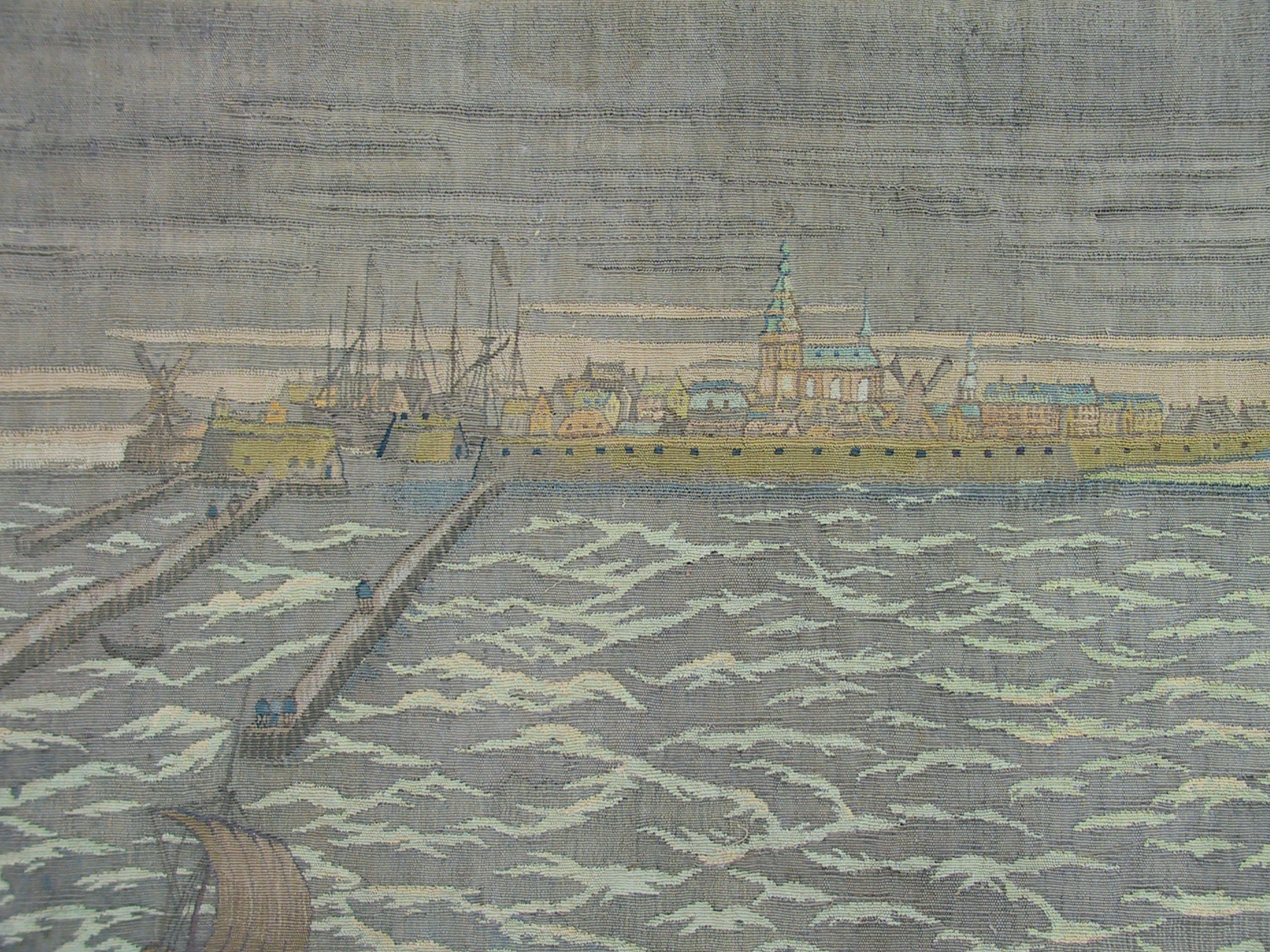
Silhouette of the fortified port city of Vlissingen
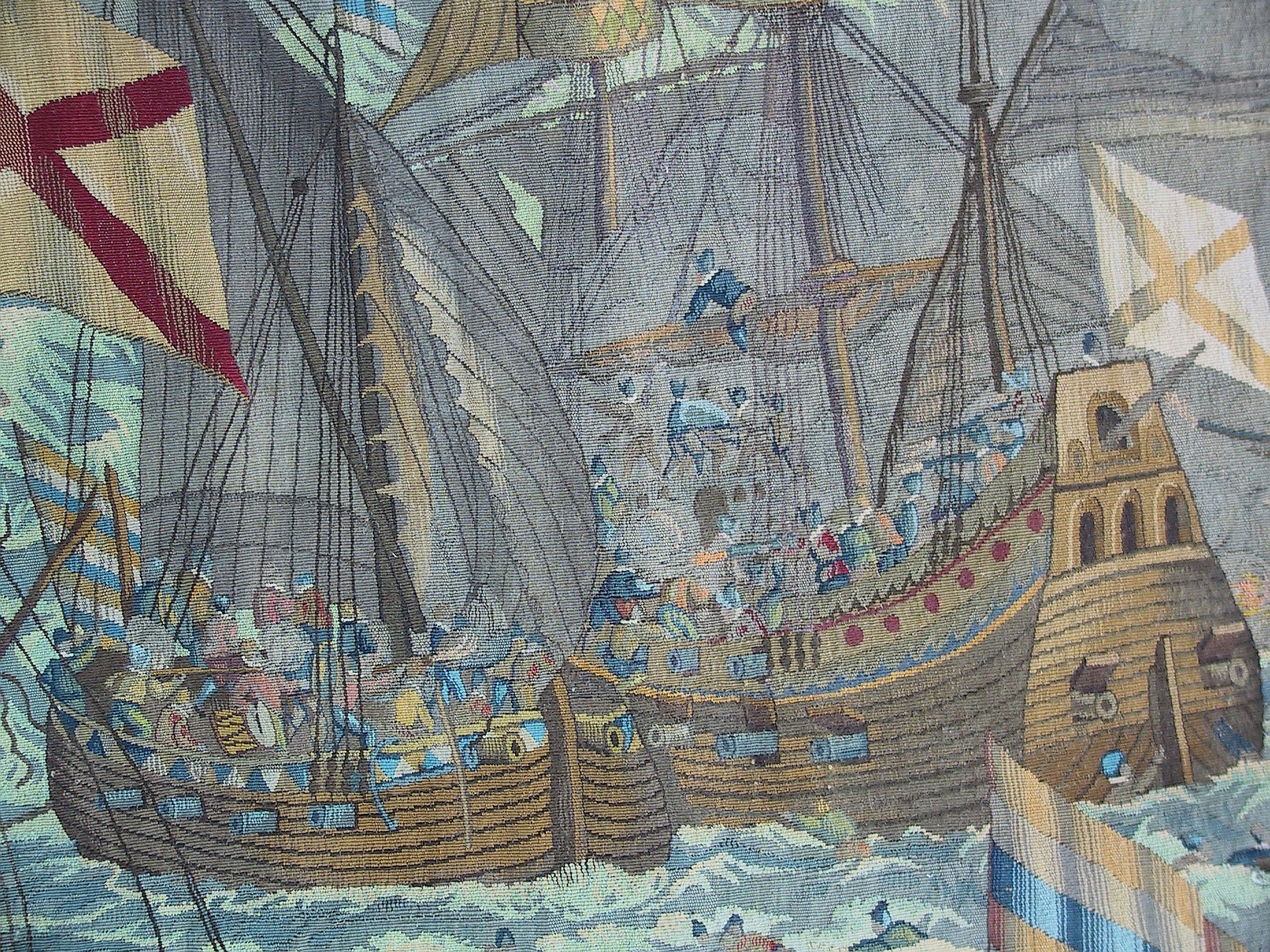
Sea Beggars boarding a Spanish ship
Capture at Fort Rammekens
The Spanish ships reached Fort Rammekens, where more than 600 soldiers went ashore. Later that day, the Zeeland forces captured several Spanish ships near Rammekens or set them on fire.
On the same day, an unsuspecting Portuguese merchant fleet arrived on its way to Antwerp. The fleet dropped anchor off Vlissingen for inspection. The Zeeland forces confiscated the ships. Part of the cargo, which consisted of coins, precious stones, pearls, spices and sugar and was valued at between 500,000 and 600,000 guilders, was sold in London. The proceeds made an essential contribution towards the ever-increasing costs of the war.
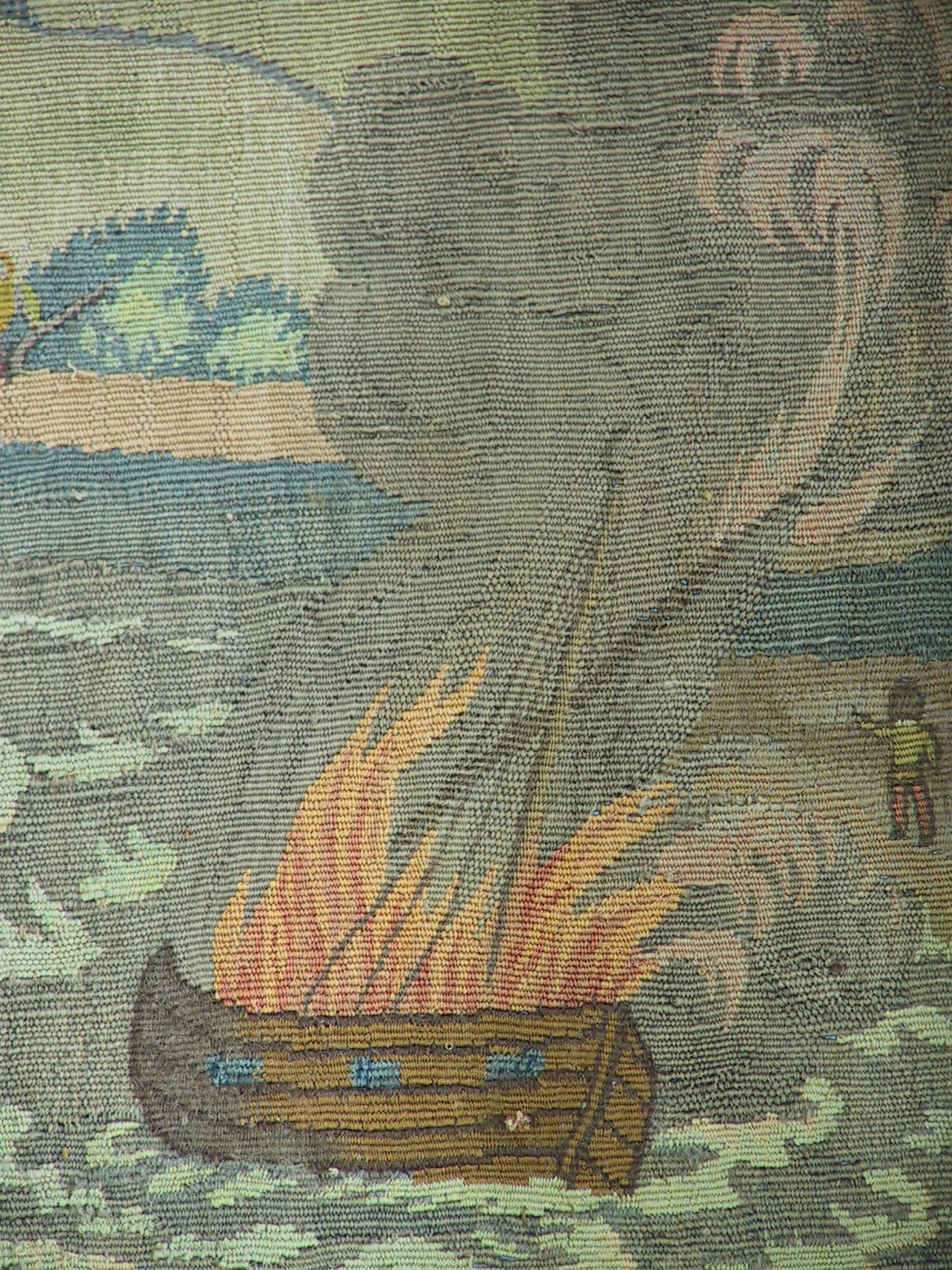
Burning boat
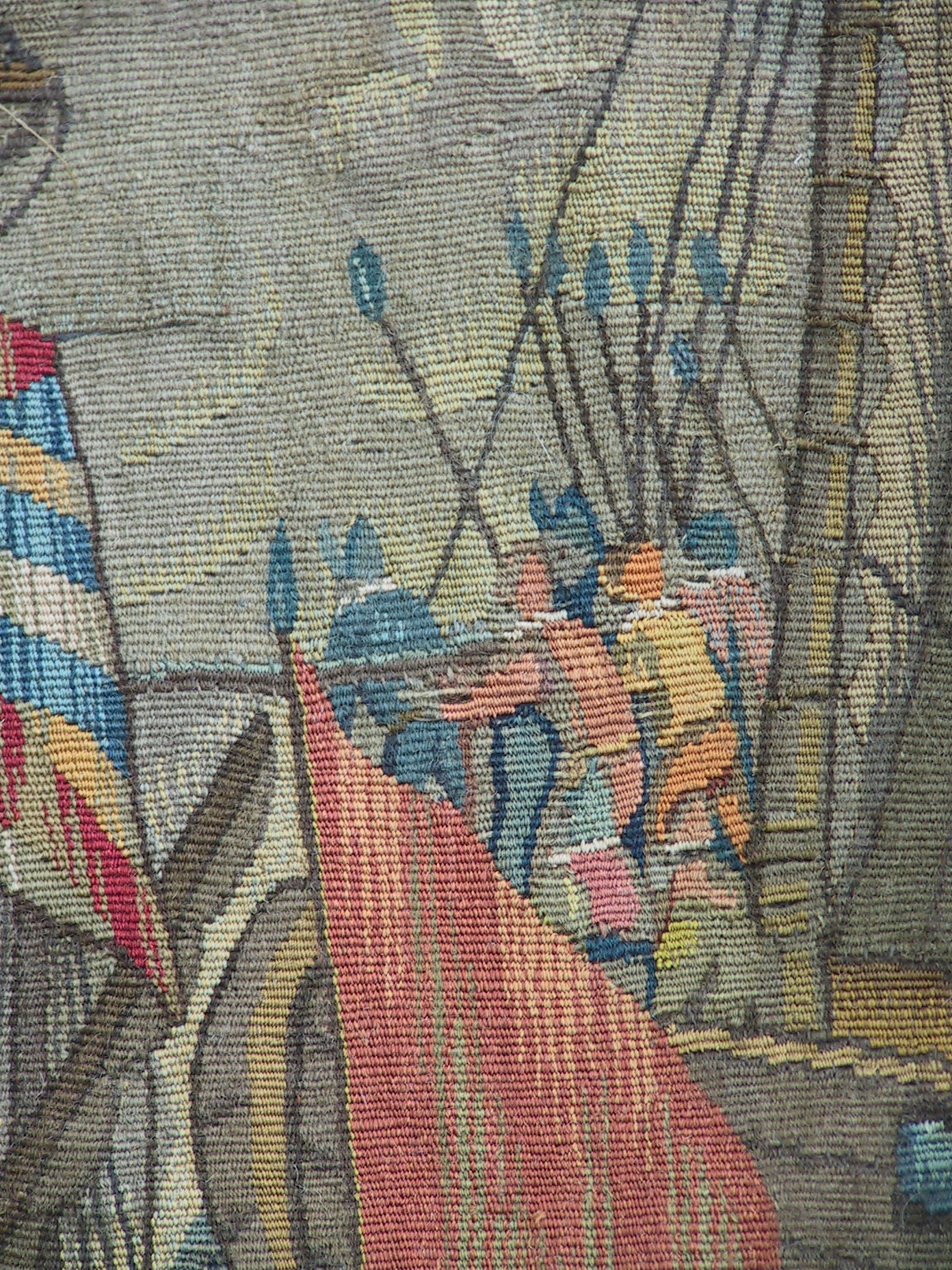
Battle scene
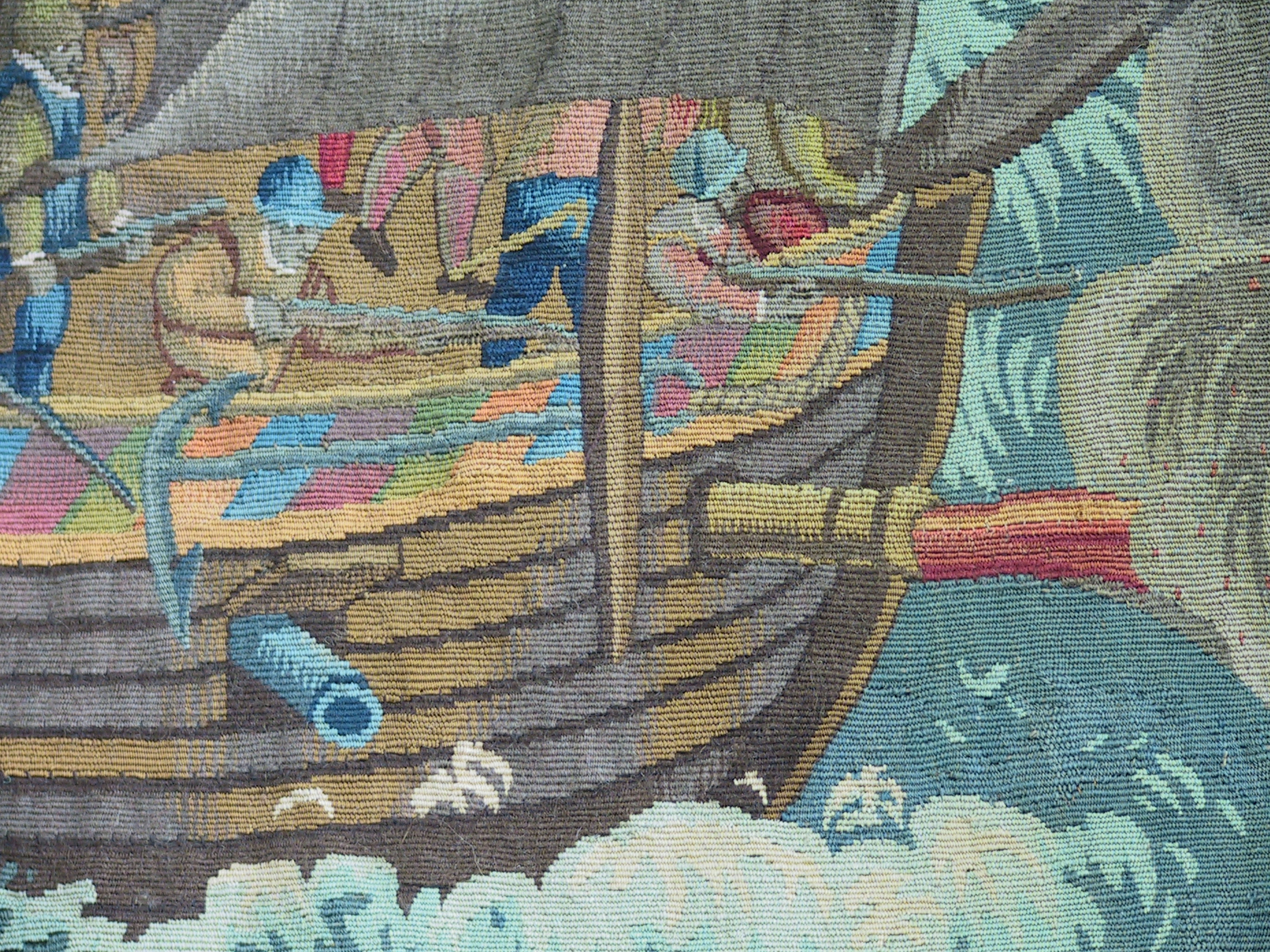
Battle scene
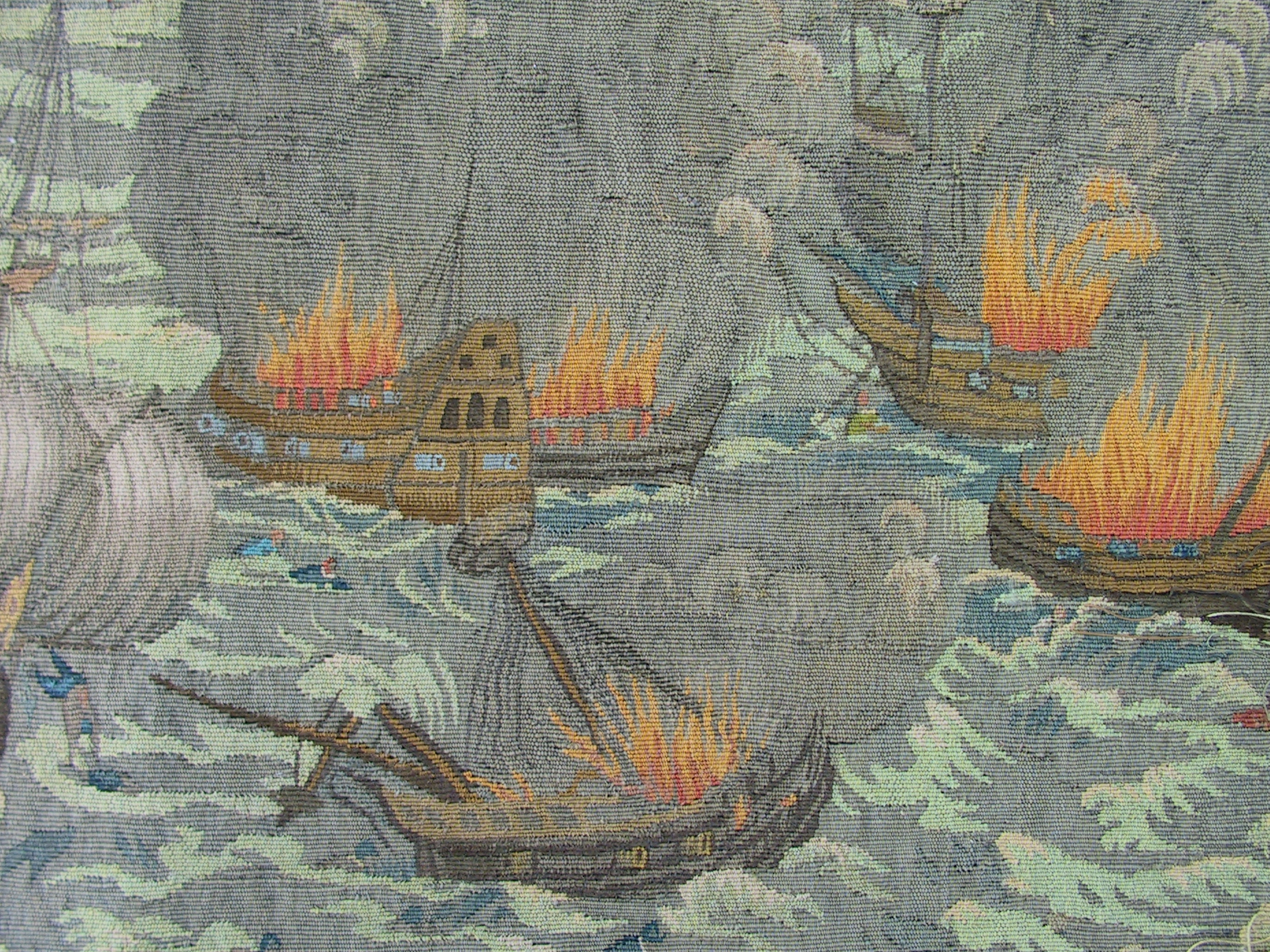
Burning boats
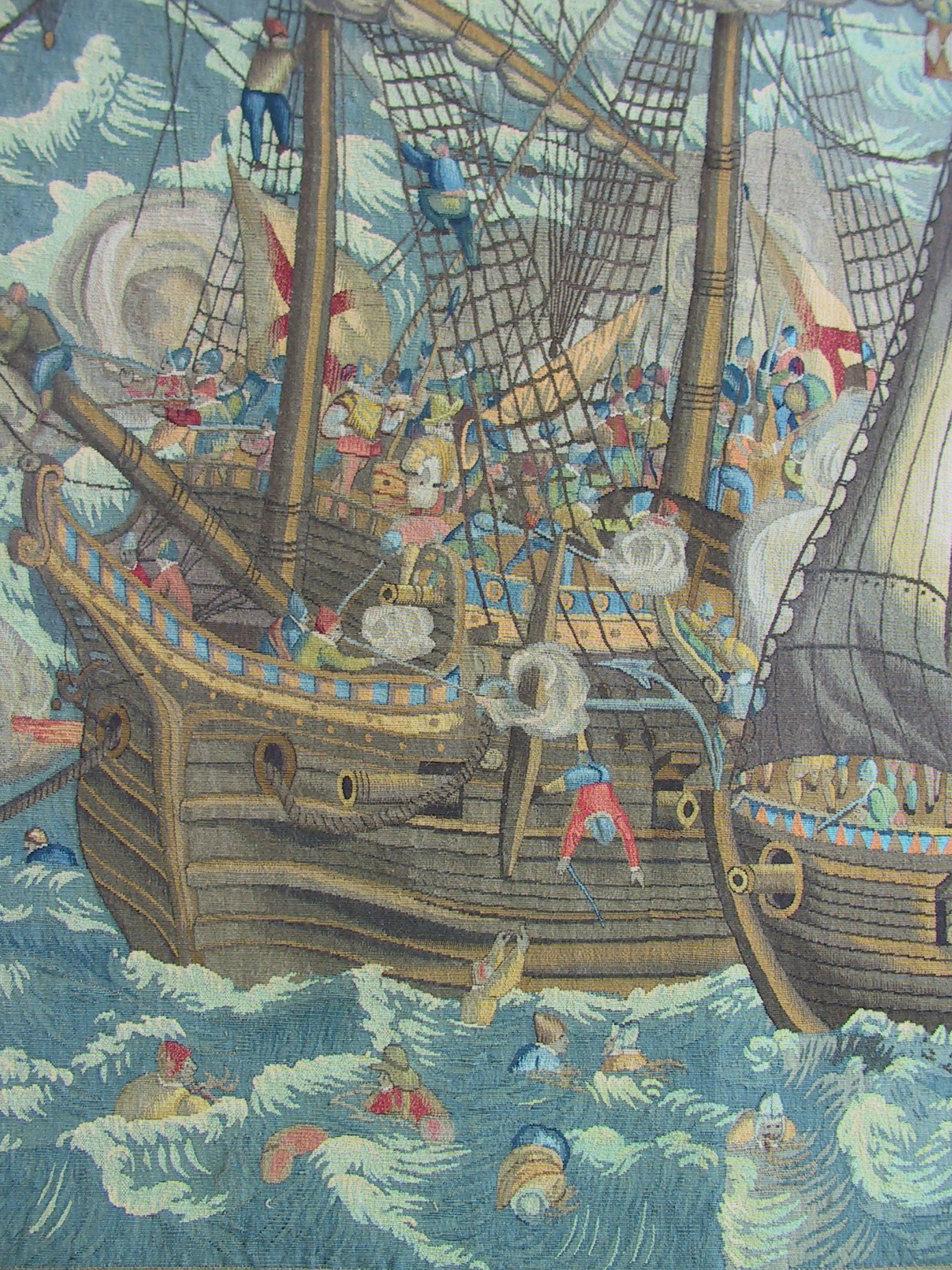
Boarding a Spanish ship
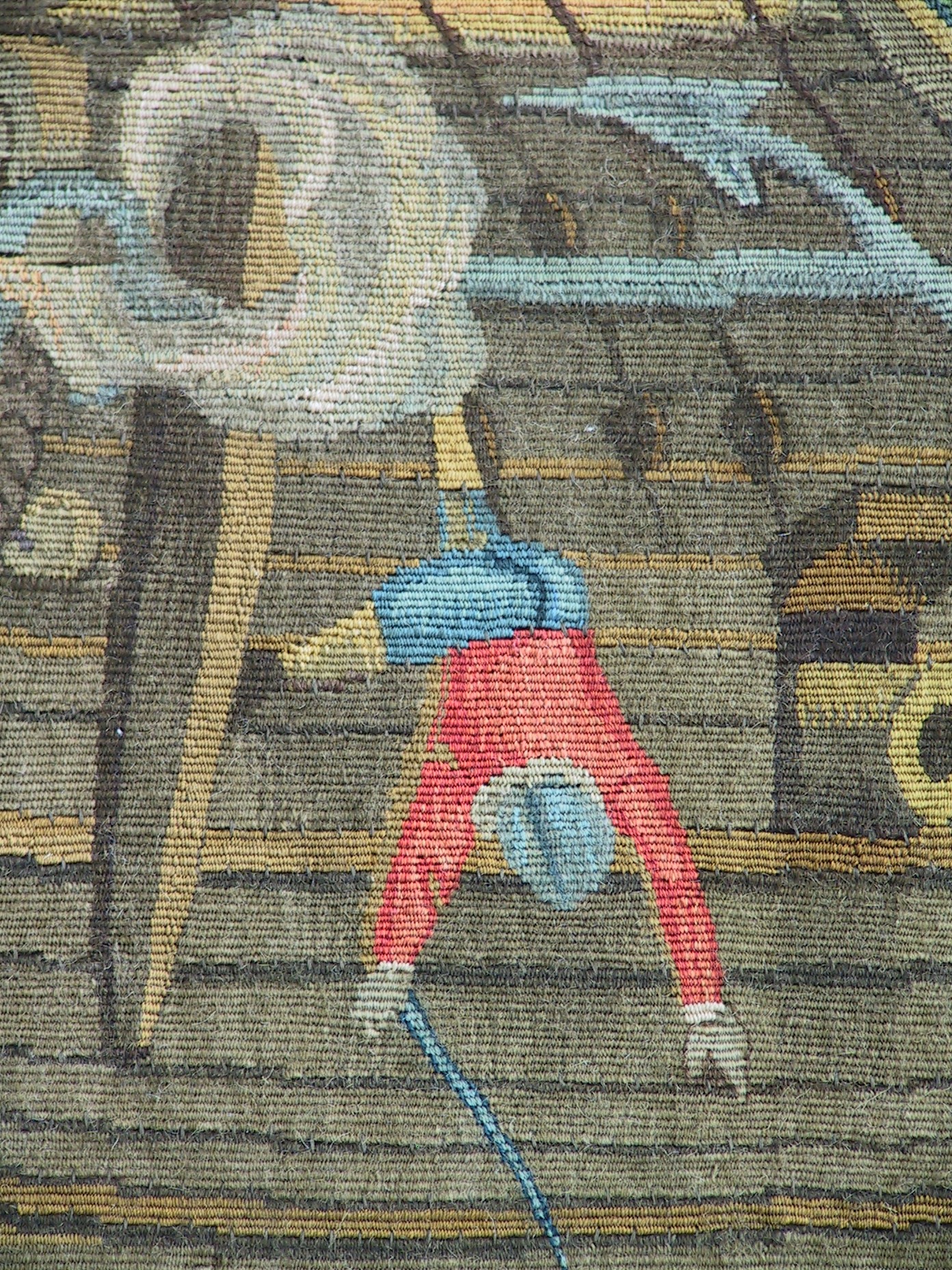
Soldier falling from a boat
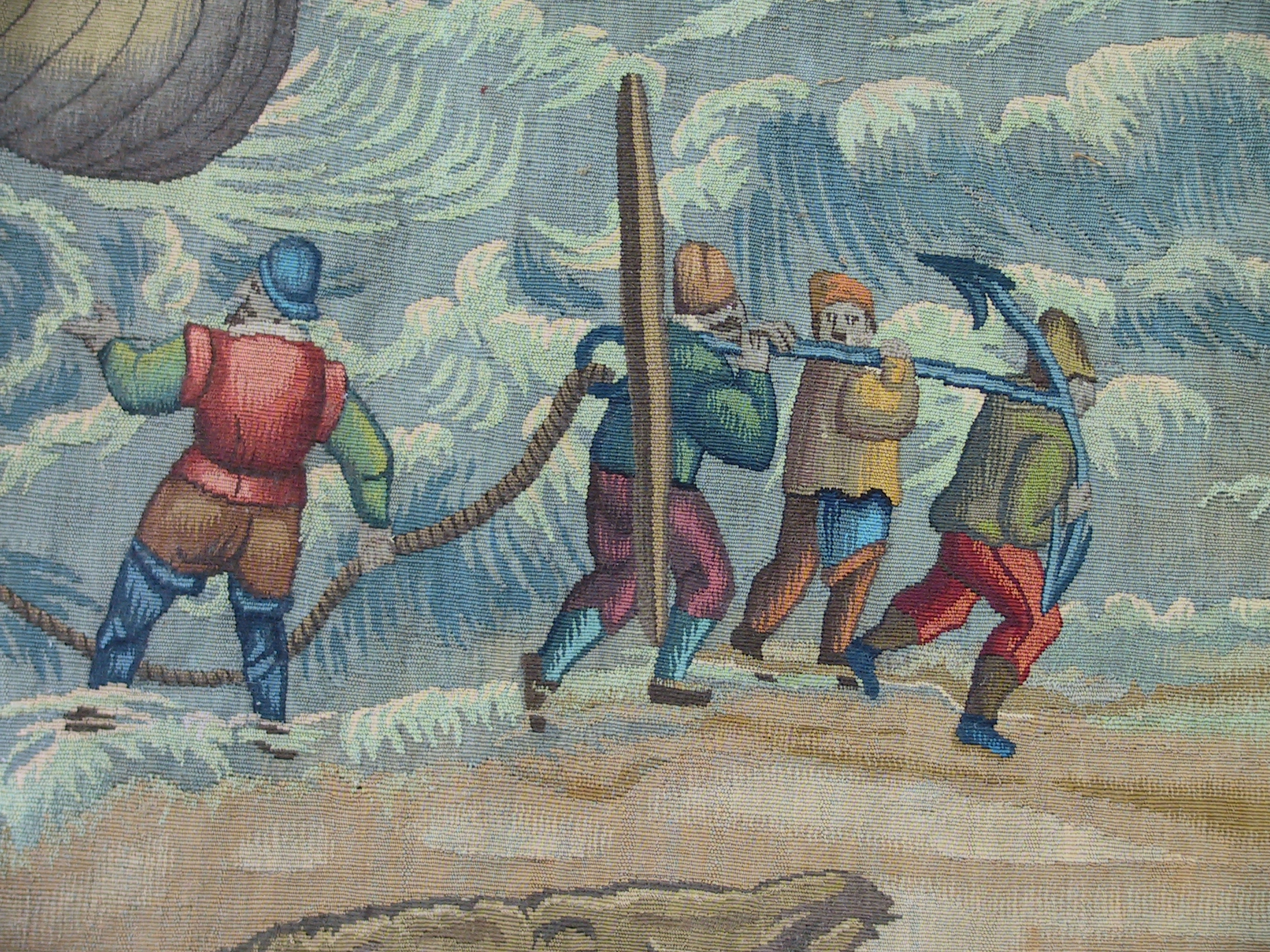
Soldiers carrying an anchor near the shore
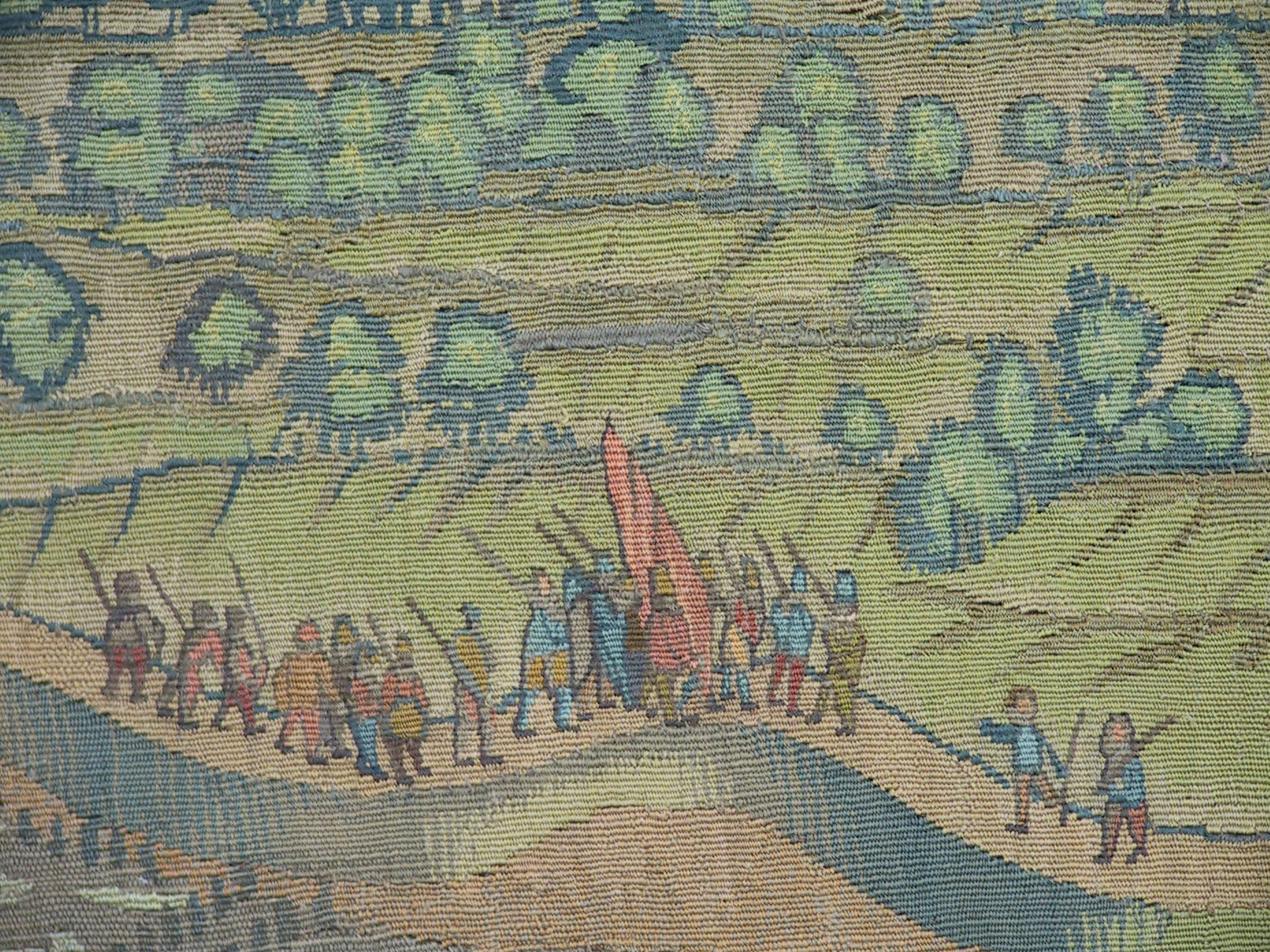
Zeeland soldiers on the quay
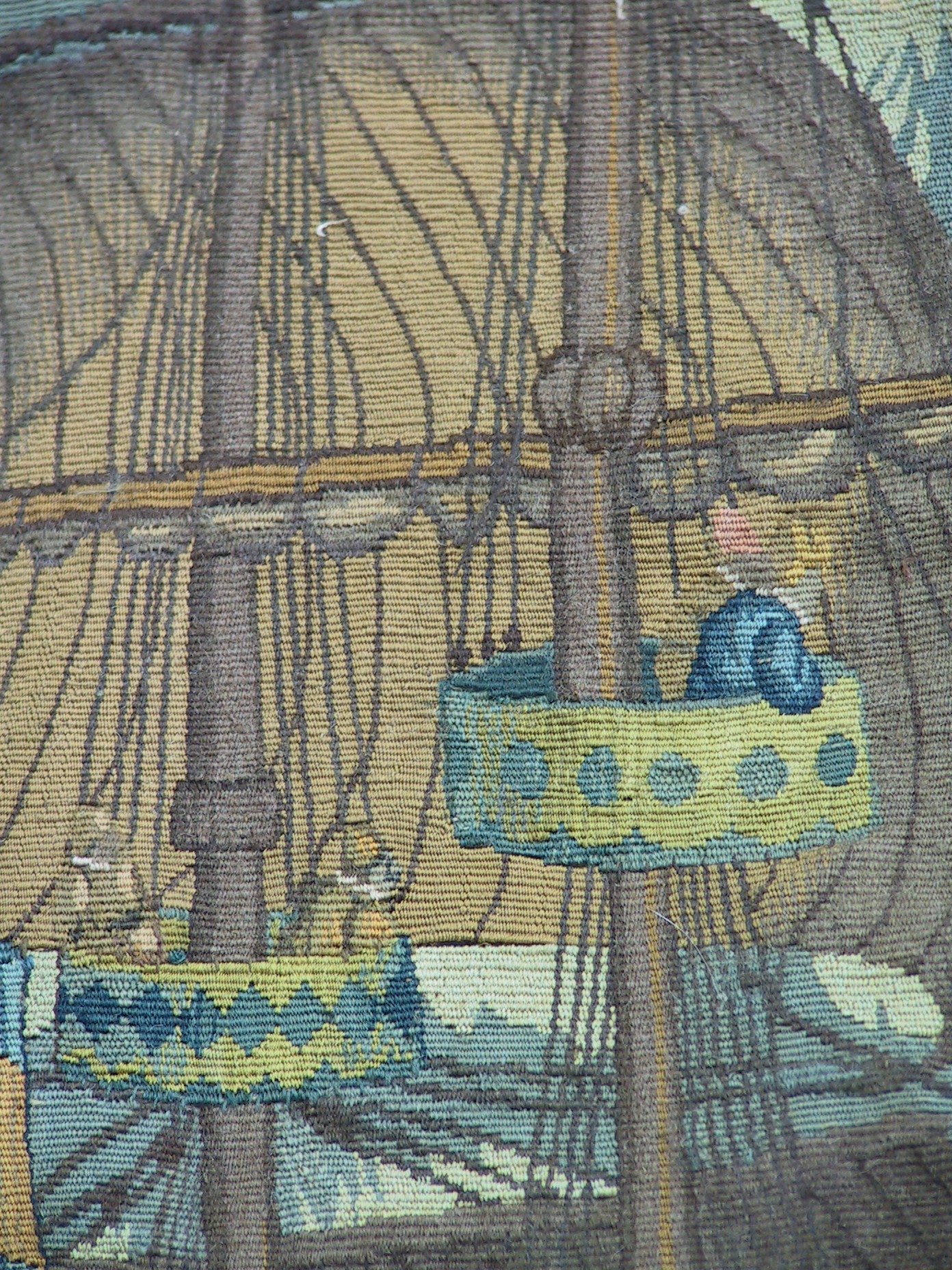
Soldier in the crow’s nest
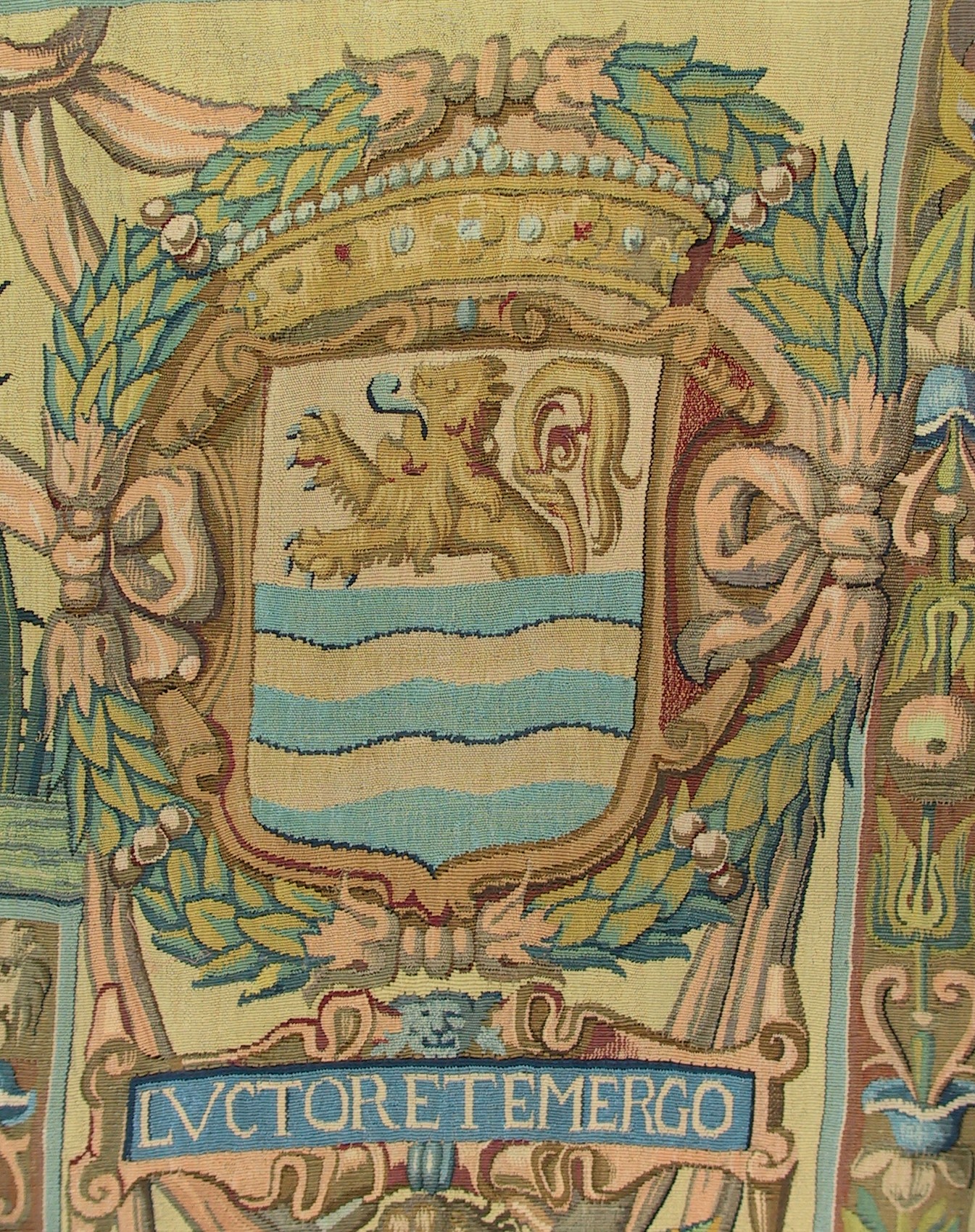
The coat of arms of Zeeland in the top right-hand corner
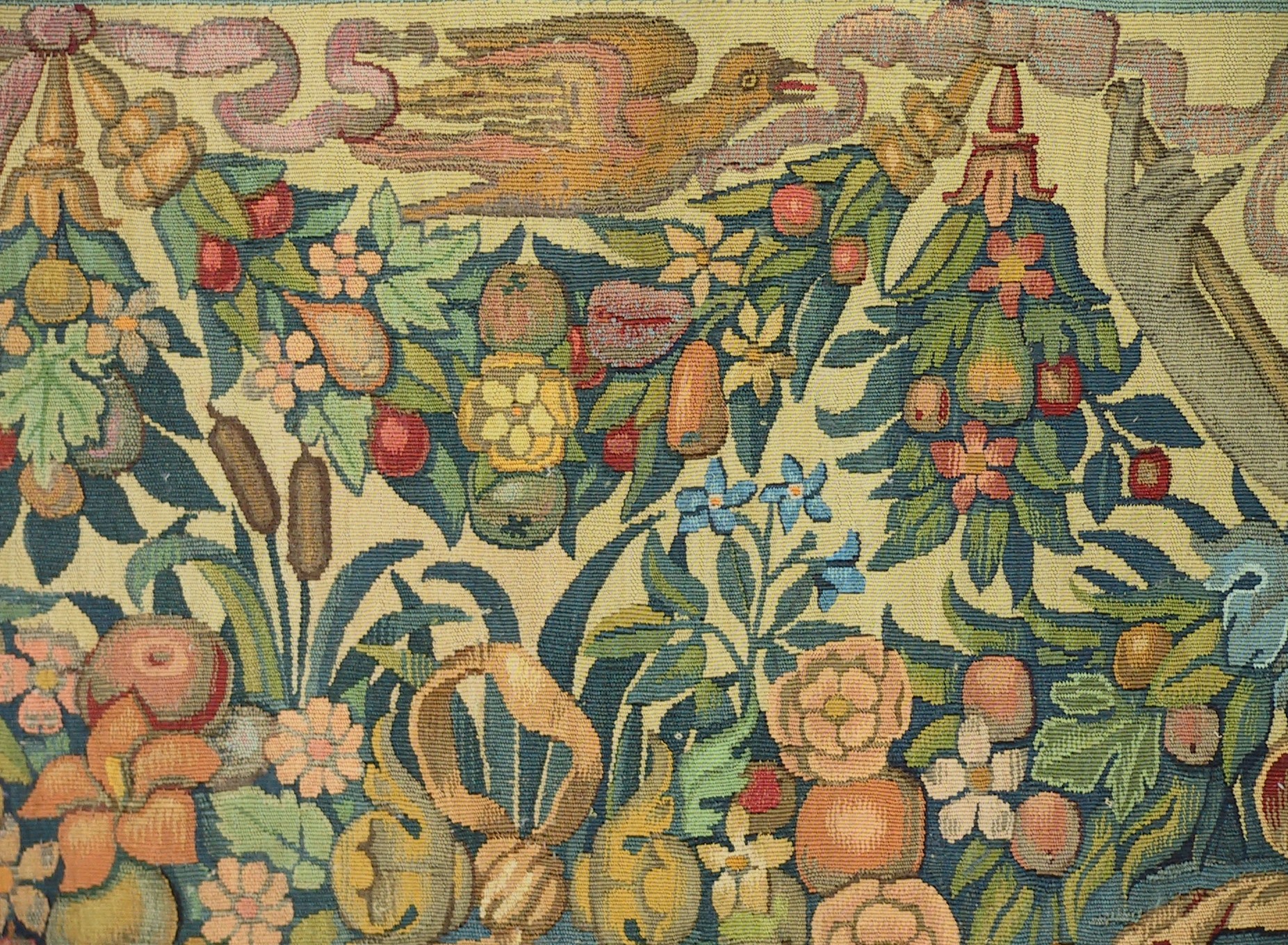
Detail of the upper border with a bird